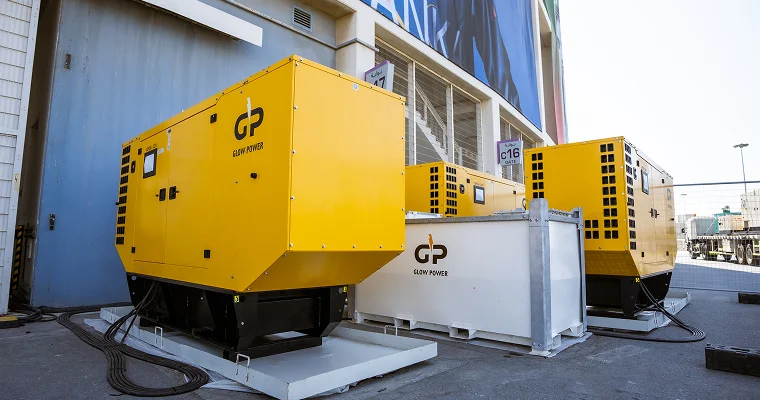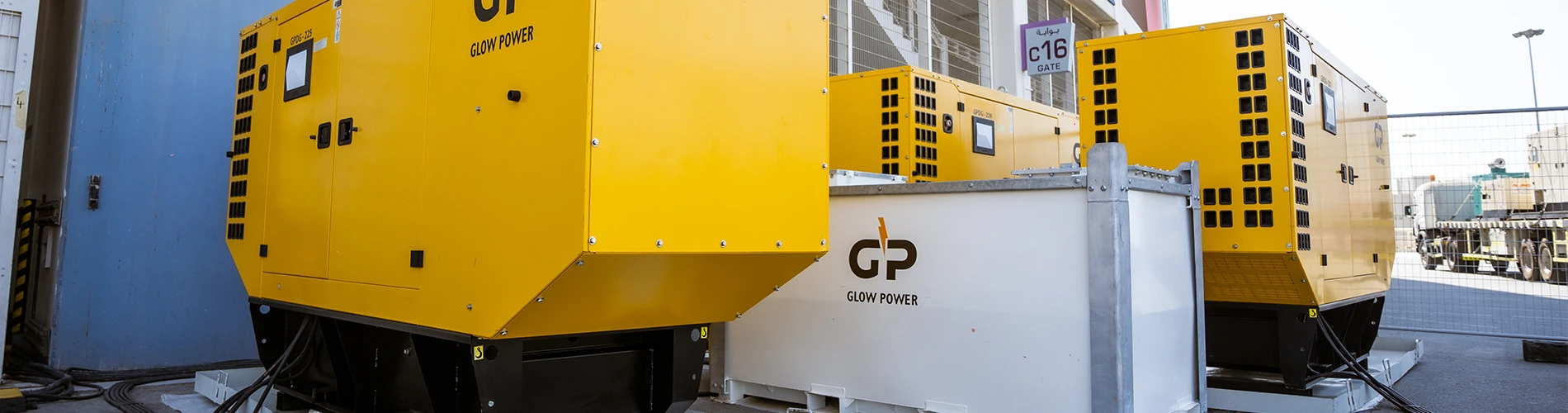
Diesel generators are widely used to provide temporary, standby, and prime power across construction sites, industrial facilities, events, utilities, and remote operations. In power rental applications, selecting the correct generator is especially critical, as loads can change frequently and downtime is costly.
Three electrical terms appear on every generator specification sheet: kilowatts (kW), kilovolt-amperes (kVA), and power factor (PF). While closely related, each describes a different aspect of generator performance. Understanding how they work together is essential for proper sizing and reliable operation.
Key Terms Explained
Kilowatts (kW) – Real Power
Kilowatts (kW) represent the real or active power delivered by a generator. This is the portion of electrical power that performs useful work.
- Powers lighting, motors, pumps, HVAC systems, and electronic equipment
- Represents the actual energy consumed by the load
- Directly limited by the diesel engine capacity
If the connected load requires more kW than the engine can supply, the generator may overload, overheat, or shut down.
IMPORTANT NOTE
The kW rating tells you how much usable power the generator engine can deliver. It does not represent the total electrical capacity of the generator.
Kilovolt-Amperes (kVA) – Apparent Power
Kilovolt-amperes (kVA) represent apparent power, which is the total electrical power flowing through the generator’s alternator.
- Includes real power (kW) and reactive power (kVAR)
- Defines the thermal and current limits of the alternator
- Becomes especially important for motor-driven loads
A generator can reach its kVA limit even when kW demand appears acceptable.
WARNING
In motor-heavy rental applications, generators often reach their kVA limit before their kW limit. Ignoring kVA can lead to overheating and voltage instability.
Power Factor (PF)
Power factor (PF) describes how efficiently electrical power is being used. It is the ratio of real power to apparent power.PF close to 1.0 indicates efficient power usage
- Lower PF means more current is required to deliver the same kW
- Low PF increases alternator loading and electrical losses
Most industrial and rental loads particularly those involving motors operate with a lagging power factor.
The Beer Analogy (Visual Explanation)
While generator ratings are best understood through technical definitions, a simple visual analogy can help clarify how kW, kVA, and power factor relate to one another.
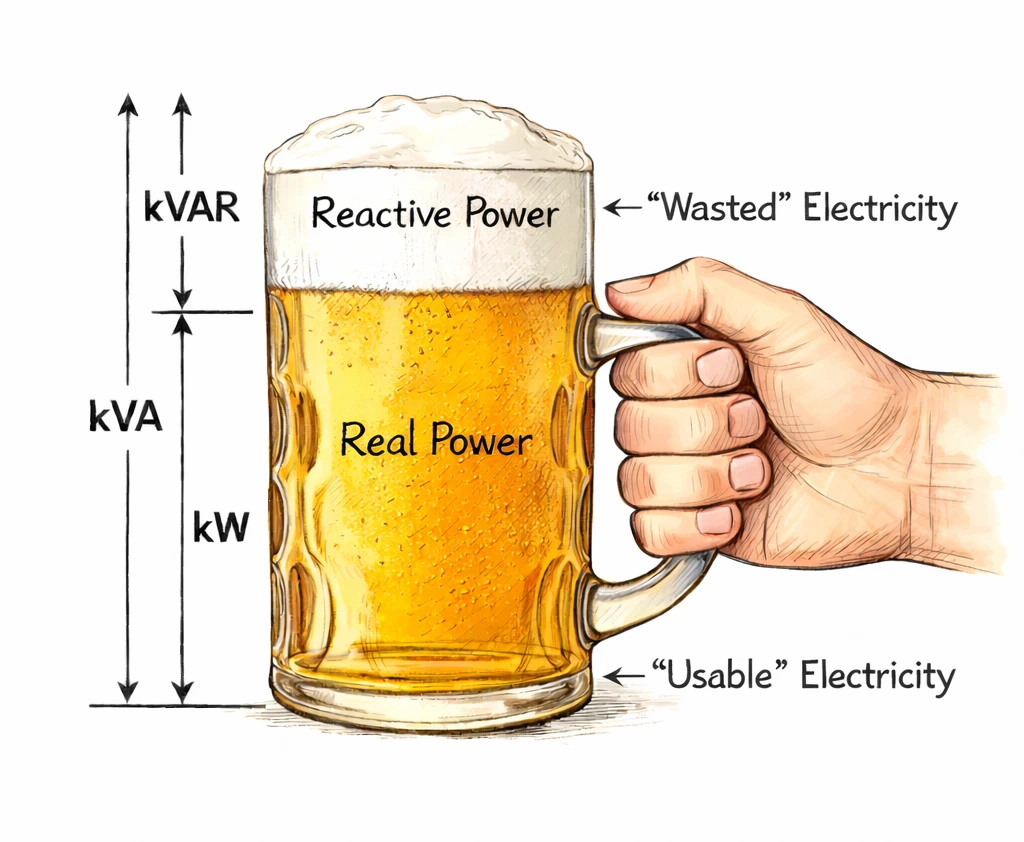
In the beer analogy:
- The full mug represents kVA (apparent power)
This is the total electrical capacity available from the generator. - The liquid beer represents kW (real power)
This is the usable power that actually performs work—running motors, lighting, and equipment. - The foam represents kVAR (reactive power)
This portion of power is necessary to support electrical systems (such as motor magnetic fields) but does not perform useful work.
The ratio of beer (kW) to the total mug (kVA) represents the power factor. A higher power factor means more of the generator’s capacity is being converted into usable power, while a lower power factor means a greater portion is taken up by reactive power.
KEY INSIGHT
Even though reactive power does not perform useful work, it still occupies generator capacity. This is why generators can reach their kVA limit before reaching their kW limit—especially in motor-heavy rental applications.
Standard Power Factor in Power Rental
Most diesel generators used in rental fleets are rated at a power factor of 0.8.
This means:
Example:
A 500 kVA generator provides:
PRO TIP
If your load is specified only in kW, divide by 0.8 to estimate the generator kVA size commonly used in power rental.
Generator kVA to kW Conversion Table (10–1000 kVA)
Formula Used
| kVA | kW @ 0.70 PF | kW @ 0.75 PF | kW @ 0.80 PF | kW @ 0.85 PF | kW @ 0.90 PF |
|---|---|---|---|---|---|
| 10 | 7 | 7.5 | 8 | 8.5 | 9 |
| 20 | 14 | 15 | 16 | 17 | 18 |
| 30 | 21 | 22.5 | 24 | 25.5 | 27 |
| 40 | 28 | 30 | 32 | 34 | 36 |
| 50 | 35 | 37.5 | 40 | 42.5 | 45 |
| 60 | 42 | 45 | 48 | 51 | 54 |
| 70 | 49 | 52.5 | 56 | 59.5 | 63 |
| 80 | 56 | 60 | 64 | 68 | 72 |
| 90 | 63 | 67.5 | 72 | 76.5 | 81 |
| 100 | 70 | 75 | 80 | 85 | 90 |
| 150 | 105 | 113 | 120 | 128 | 135 |
| 200 | 140 | 150 | 160 | 170 | 180 |
| 250 | 175 | 188 | 200 | 213 | 225 |
| 300 | 210 | 225 | 240 | 255 | 270 |
| 350 | 245 | 263 | 280 | 298 | 315 |
| 400 | 280 | 300 | 320 | 340 | 360 |
| 450 | 315 | 338 | 360 | 383 | 405 |
| 500 | 350 | 375 | 400 | 425 | 450 |
| 550 | 385 | 413 | 440 | 468 | 495 |
| 600 | 420 | 450 | 480 | 510 | 540 |
| 650 | 455 | 488 | 520 | 553 | 585 |
| 700 | 490 | 525 | 560 | 595 | 630 |
| 750 | 525 | 563 | 600 | 638 | 675 |
| 800 | 560 | 600 | 640 | 680 | 720 |
| 850 | 595 | 638 | 680 | 723 | 765 |
| 900 | 630 | 675 | 720 | 765 | 810 |
| 950 | 665 | 713 | 760 | 808 | 855 |
| 1000 | 700 | 750 | 800 | 850 | 900 |
SIZING REMINDER
Always size up to the next standard generator rating and allow additional margin for motor starting and load fluctuations.
What Limits Generator Output
Engine Limit (kW)
- Defines maximum usable power
- Exceeding it increases fuel consumption and heat
- Can trigger protective shutdowns
Alternator Limit (kVA)
- Defined by current and heat
- Commonly exceeded during motor starts or low power factor operation
Both limits must be respected for reliable rental operation.
Importance of Proper Sizing in Power Rental
Incorrect generator sizing can result in:
- Voltage dips and nuisance trips
- Poor fuel efficiency
- Equipment damage
- Costly downtime
Correct sizing ensures:
- Stable voltage and frequency
- Efficient fuel use
- Adequate motor-starting capability
- Reliable performance throughout the rental period
Key Takeaways
- kW is the usable power consumed by the load
- kVA is the total electrical capacity of the generator
- Power factor determines how efficiently power is used
- Most rental generators operate at PF 0.8
- Engines limit kW; alternators limit kVA
- Motor loads significantly affect sizing decisions
Final Recommendation
When selecting or renting a diesel generator, always evaluate:
- Actual kW demand
- Expected power factor
- Motor starting currents
- Load variation over time
Working with an experienced power rental provider or electrical professional ensures the generator is properly sized, efficient, and reliable under real-world operating conditions.
Conclusion
Understanding the relationship between kW, kVA, and power factor is essential for selecting the right diesel generator especially in power rental applications where loads can vary and reliability is critical. Correct sizing helps prevent overloads, improves fuel efficiency, and ensures stable power delivery throughout the rental period.
If you’re planning a temporary power project or need expert assistance selecting the right equipment, explore our Generator Rental Services to see how we support construction sites, industrial operations, events, and emergency power needs.