The UAE is home to some of the world’s largest outdoor events, construction projects, and temporary facilities. These activities operate in an environment where summer temperatures can exceed 45°C, making cooling not just useful, but essential.
Whether you are setting up a hospitality tent, running a corporate activation, or managing a construction site, the right cooling system ensures comfort, protects equipment, and maintains safety compliance. For most temporary operations, cooling equipment rental is the most practical approach—providing flexibility, reliability, and lower overall cost.
Why Temporary Cooling Matters in the UAE
Extreme Heat and Rapid Heat Gain
Temporary structures such as tents, cabins, and modular rooms heat up quickly due to thin materials, direct sunlight, interior lighting, and high foot traffic.
Safety and Comfort
Events require guest comfort. Construction sites require worker safety. Without proper cooling, heat stress becomes a serious risk, reducing productivity and potentially violating labour welfare regulations.
Equipment Protection
High temperatures can damage AV systems, lighting controllers, IT hardware, and electrical equipment. Reliable cooling prevents overheating, system failures, and operational interruptions.
Cooling Systems Commonly Used in UAE Projects
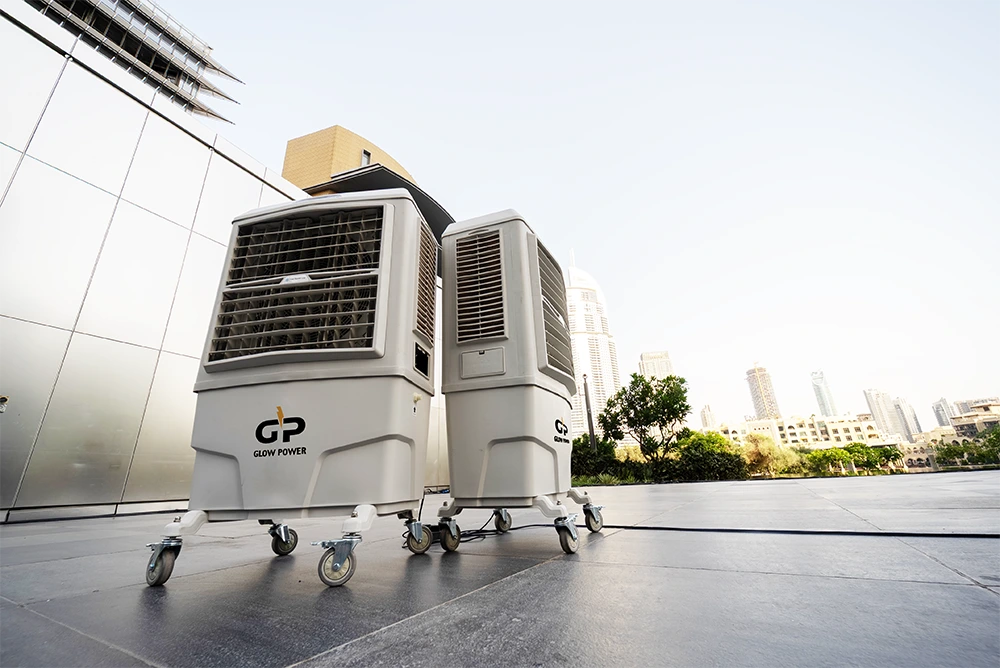
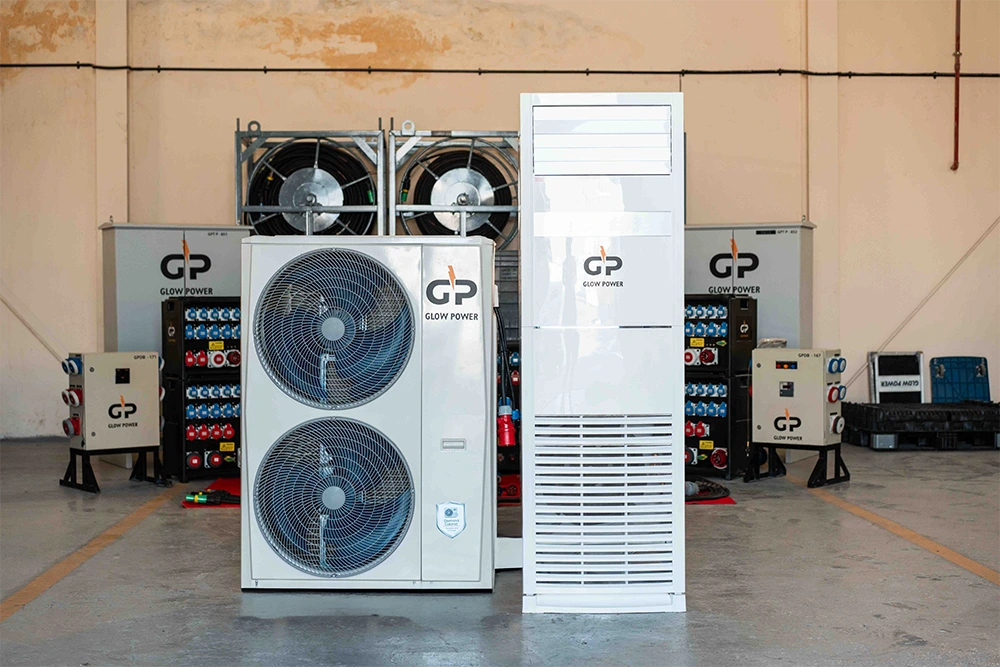
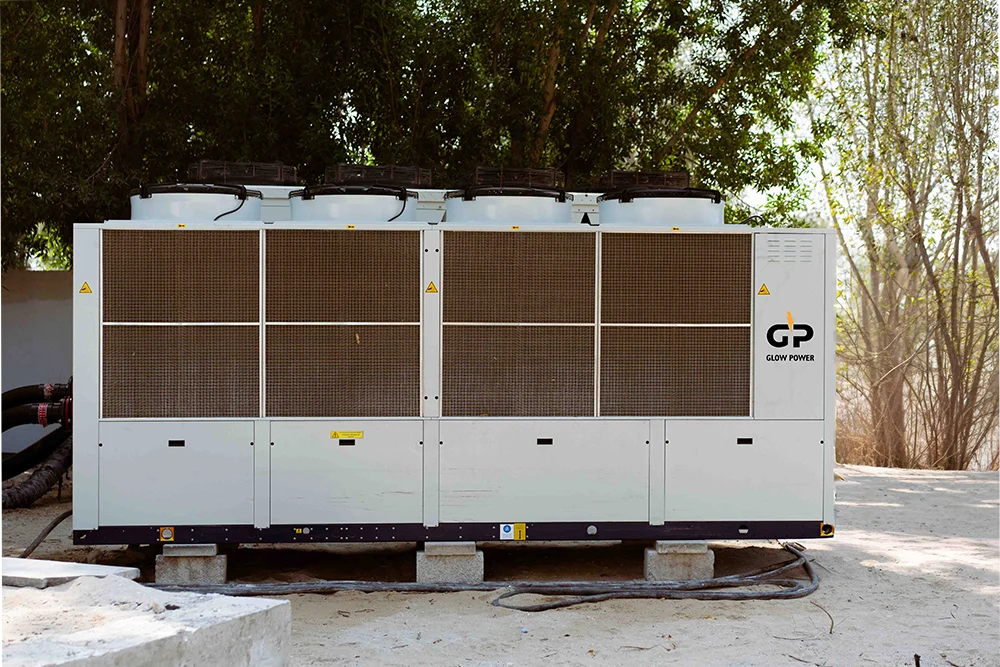
Below is a simplified overview of the main temporary cooling units used across UAE events, tents, and construction sites.
The first table shows technical specifications, and the second table lists common applications.
Cooling Equipment Specifications
| Equipment Type | Cooling Capacity | Power Input | Voltage | Notes |
|---|---|---|---|---|
| Portable Air Coolers | Evaporative | 800–1400W | 220–240V (1Ø) | Spot cooling only |
| 5 Ton AC Unit | 5 TON (48,000 BTU) | ~4.5 kW | 415V (3Ø) | DX cooling for small spaces |
| 10 Ton AC (Package or Standing) | 10 TON (120,000 BTU) | 11–12 kW | 415V (3Ø) | Package AC or standing AC option |
| 25 Ton AC Unit | 25 TON (300,000 BTU) | 32–38 kW | 415V (3Ø) | High static pressure unit |
| 100 Ton Chiller | 100 TON (1,200,000 BTU) | 210–250 kW | 415V (3Ø) | Centralized chiller system |
| 200 Ton Chiller | 200 TON (2,400,000 BTU) | 250–280 kW | 415V (3Ø) | Multi-zone chiller system |
Common Uses by Equipment Type
| Equipment Type | Ideal Applications |
|---|---|
| Portable Air Coolers | Kiosks, security posts, open-air work points |
| 5 Ton AC Unit | Small tents, office cabins, technical rooms |
| 10 Ton AC (Package or Standing) | Medium tents, hospitality lounges, enclosed rooms without ducting |
| 25 Ton AC Unit | Large tents, weddings, corporate halls |
| 100 Ton Chiller | Multi-room halls, large tents, production zones |
| 200 Ton Chiller | Exhibition structures, high-density large venues |
Cooling Load Estimation
Cooling requirements in the UAE depend heavily on factors such as occupancy, tent material, sun exposure, ventilation, equipment heat load, and time of day.
For temporary structures in peak UAE summer conditions, a practical rule of thumb is:
180–240 W of cooling per square meter (W/m²)
This helps planners estimate cooling needs early, even before a formal engineering calculation is performed.
Cooling Load Estimation Table
| Space Type | Area (m²) | Occupancy | Cooling Factor (W/m²) | Estimated Load (kW) | Suitable Cooling Capacity |
|---|---|---|---|---|---|
| Small kiosk / security post | 10–20 | 1–3 | 100–150 | 1–3 | Portable Air Coolers |
| Small VIP / office tent | 50–80 | 15–30 | 180–200 | 9–16 | 5 Ton AC |
| VIP / hospitality tent | 100–150 | 40–100 | 190–210 | 19–32 | 5–10 Ton AC |
| Medium event tent | 200–300 | 120–220 | 200–220 | 40–66 | 10–25 Ton AC |
| Large wedding / corporate tent | 400–500 | 250–400 | 210–230 | 84–115 | 25 Ton AC (single or multiple units) |
| Multi-room temporary hall | 700–1000 | 400–700 | 200–230 | 140–230 | 100 Ton Chiller |
| Large exhibition structure | 1200–1600 | 700–1100 | 210–240 | 250–380 | 100–200 Ton Chiller |
Why This Matters
This table allows event planners and site managers to quickly understand:
- What cooling tonnage their space requires
- How occupancy impacts cooling load
- When to use AC units vs chillers
- Whether multiple units will be necessary
- How early-stage planning prevents overheating issues
It also helps avoid under-sizing (leading to hot tents) or over-sizing (wasting power and fuel).
Cooling System Comparison Chart
The table below offers a quick, side-by-side comparison of the main cooling systems used in UAE temporary environments. This helps users understand which options are suitable for their specific application.
Cooling System Comparison
| Cooling Type | Cooling Output | Best For | Energy Use | Setup Speed | Air Distribution |
|---|---|---|---|---|---|
| Portable Air Coolers | Very Low | Kiosks, guard rooms | Very Low | Fast | Local airflow |
| 5 Ton AC | Low | Small tents, cabins | Moderate | Fast | Local cooling |
| 10 Ton AC | Medium | Medium tents | Moderate | Fast | Local–broad |
| 25 Ton AC | High | Large tents | High | Medium | Broad distribution |
| 100 Ton Chiller | Very High | Large halls | High | Medium | Multi-zone |
| 200 Ton Chiller | Extremely High | Exhibition halls | High | Moderate | Multi-zone |
Key Takeaways
- Portable air coolers are NOT real cooling; they only help with airflow.
- 5–25 Ton AC units are ideal for most tented events, lounges, and gatherings.
- Chillers (100–200 Ton) are best for large or multi-zone structures requiring stable temperature control.
- Setup speed, power availability, and ducting options influence which system is appropriate.
Why Cooling Rental Is the Practical Choice
Cost Efficiency
High-capacity cooling equipment is expensive to purchase, maintain, and store. Renting eliminates capital expenditure and aligns cooling capacity with your exact project duration and needs.
Maintenance-Free Operation
Cooling systems operating in UAE conditions require frequent cleaning and servicing due to dust, sand, and heat. With rental, all maintenance, installation, and troubleshooting are handled by the provider.
Scalability When Conditions Change
Cooling demands change based on weather, occupancy, and layout. Rental systems can be added, upgraded, or removed easily and quickly.
Flexibility for Dynamic Layouts
Temporary environments evolve—tents expand, equipment moves, or new rooms are added. Rental cooling systems can be repositioned and reconfigured without major modifications.
Misconceptions About Cooling in the UAE
Cooling in the UAE’s extreme climate is often misunderstood, especially when it comes to temporary structures like tents and outdoor work areas. Below are some of the most common misconceptions that lead to discomfort, equipment issues, or insufficient cooling during events and construction operations.
“Air coolers can replace AC units.”
Portable air coolers only move air and provide light evaporative comfort. They do not reduce temperature in UAE humidity and should never be used as the primary cooling source for enclosed tents.
“Fans help lower the temperature.”
Fans circulate hot air but do not reduce heat. In high temperatures, they can actually make enclosed spaces feel warmer by distributing trapped heat.
“Larger AC tonnage always provides better results.”
Oversizing cooling systems can cause condensation, humidity imbalance, and ineffective cooling distribution. Each tent or space requires calculated cooling—not simply “as much tonnage as possible.”
“Night events don’t need strong cooling.”
Temperatures inside tents often remain hot well after sunset due to stored heat in the fabric and surrounding environment. Evening events still require proper AC planning.
“Chillers are only for massive events.”
Chillers are often the most efficient option for long-duration cooling, multi-room structures, or high-density halls—even if the overall area is not extremely large.
“If the AC is running, the tent will stay cool regardless of layout.”
Blocked airflow, poor duct placement, high ceilings, and crowded zones can all cause uneven cooling. Proper distribution design is just as important as cooling capacity.
Conclusion
Cooling is a fundamental requirement for any temporary environment in the UAE. From small air coolers for kiosks to large chiller systems for major structures, selecting the right cooling solution ensures comfort, safety, and operational stability—even during the peak of summer.
By using realistic cooling estimates and understanding system capabilities, planners can choose the ideal setup early in the design phase. With proper planning and the flexibility of rental systems, temporary structures can remain cool, efficient, and fully functional throughout their operation.
To explore your options or request a customized cooling plan: Visit Our Cooling Solutions.