Every year across the UAE, thousands of temporary Ramadan setups transform open spaces into welcoming venues for iftar gatherings, community events, corporate hospitality, and night markets. From large-scale Ramadan tents in Dubai & Abu Dhabi to smaller majlis setups in residential compounds, these temporary spaces share a common requirement: reliable power and effective cooling.
Without proper planning, a Ramadan tent can quickly become uncomfortable or even unsafe. Temperatures inside unventilated tents can exceed 50°C during the day, and electrical faults in temporary setups are a leading cause of fire incidents during the holy month. Whether you are organizing a community iftar, a corporate Ramadan majlis, or a seasonal food market, understanding how to plan your temporary power distribution and cooling is essential.
This guide walks through the key considerations for powering and cooling temporary Ramadan setups in the UAE, including equipment selection, safety requirements, and regulatory compliance.
Why Ramadan Tents Need Dedicated Power and Cooling Planning
Temporary Ramadan setups are different from permanent venues. They rely entirely on portable infrastructure for electricity, lighting, air conditioning, food preparation, and AV equipment. Unlike a hotel ballroom or indoor hall, a tent or majlis structure has no built-in electrical supply, no ducted HVAC, and limited insulation against the UAE climate.
Key challenges include:
- Heat buildup in enclosed tents: Even during March and April, daytime temperatures in the UAE can reach 35-40°C. Tents absorb and trap heat, making cooling essential for guest comfort.
- Multiple electrical loads running simultaneously: Lighting, cooking equipment, sound systems, display screens, and cooling units all draw power at the same time, especially during iftar service.
- Safety in temporary structures: Tents and temporary Ramadan setups use fabric, carpeting, and decorative materials that increase fire risk if electrical systems are not properly installed.
- Regulatory requirements: UAE municipalities, civil defense authorities, and DEWA require temporary electrical installations to meet specific safety standards.
IMPORTANT
Ramadan events in the UAE typically run for 29-30 consecutive nights. Your power and cooling equipment must be reliable enough for continuous daily operation throughout the entire month.
Choosing the Right Generator for Your Ramadan Setup
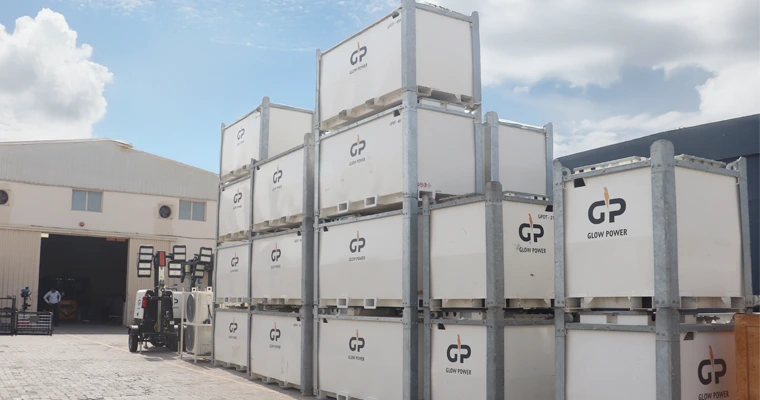
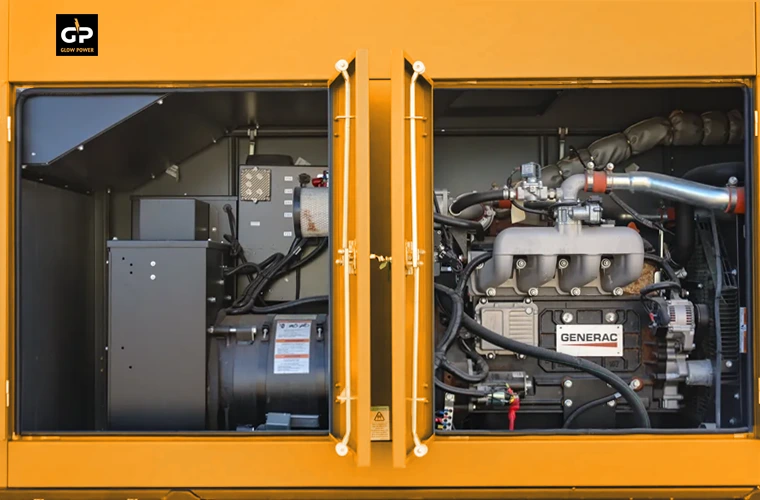
The first step in planning any temporary Ramadan tent or majlis is determining your power source. Most temporary setups rely on rental generators since permanent grid connections are rarely available for seasonal venues.
How to Estimate Your Power Requirements
Calculate your total electrical load by listing every piece of equipment that will draw power:
| Equipment | Typical Power Draw | Notes |
|---|---|---|
| Portable AC unit (5-ton) | 15-20 kW | Per unit; most tents need multiple units |
| Portable AC unit (10-ton) | 30-35 kW | Suitable for larger tent sections |
| LED lighting (full tent) | 5-15 kW | Depends on tent size and design |
| Catering/kitchen equipment | 20-50 kW | Ovens, warmers, refrigerators |
| Sound system | 3-10 kW | Includes amplifiers and speakers |
| Display screens | 1-5 kW | LED screens for Quran recitation or event content |
| Miscellaneous (charging, POS, Wi-Fi) | 2-5 kW | Often underestimated |
Once you have your total load, add a 25% safety margin to account for starting currents and peak demand during iftar service when all systems run at full capacity simultaneously.
Generator Sizing for Common Ramadan Setups
| Setup Type | Typical Tent Size | Estimated Total Load | Recommended Generator |
|---|---|---|---|
| Small majlis / private iftar | 50-100 sqm | 30-50 kW | 60 kVA to 100 kVA |
| Medium Ramadan tent / corporate iftar | 200-500 sqm | 80-150 kW | 150 kVA to 250 kVA |
| Large Ramadan tent / community event | 500-1,000 sqm | 150-300 kW | 300 kVA to 500 kVA |
| Ramadan night market / food festival | 1,000+ sqm | 300-600 kW | 500 kVA to 800 kVA (or multiple units) |
PRO TIP
For Ramadan night markets and large-scale events with multiple vendor stalls, consider using two smaller generators instead of one large unit. This provides redundancy: if one generator needs servicing, the other keeps critical systems running.
Cooling Solutions for Ramadan Tents and Majlis Setups
Cooling is often the single largest power consumer in a temporary Ramadan setup. The UAE climate, combined with the enclosed nature of tent structures, means cooling is not optional. Guests attending iftar events expect a comfortable indoor temperature, typically between 22-24°C.
Portable AC Units for Tents
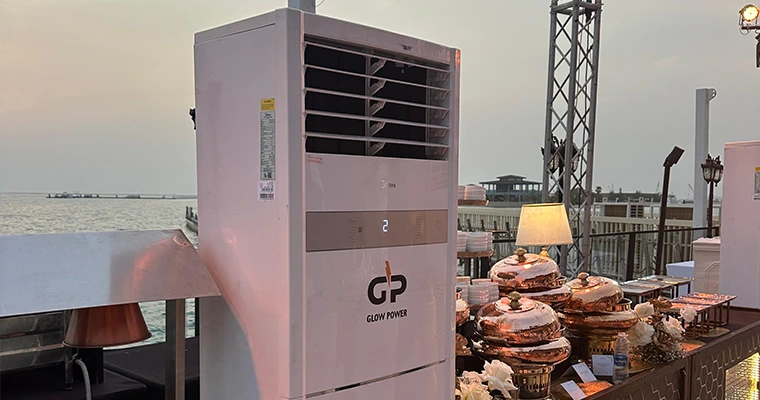
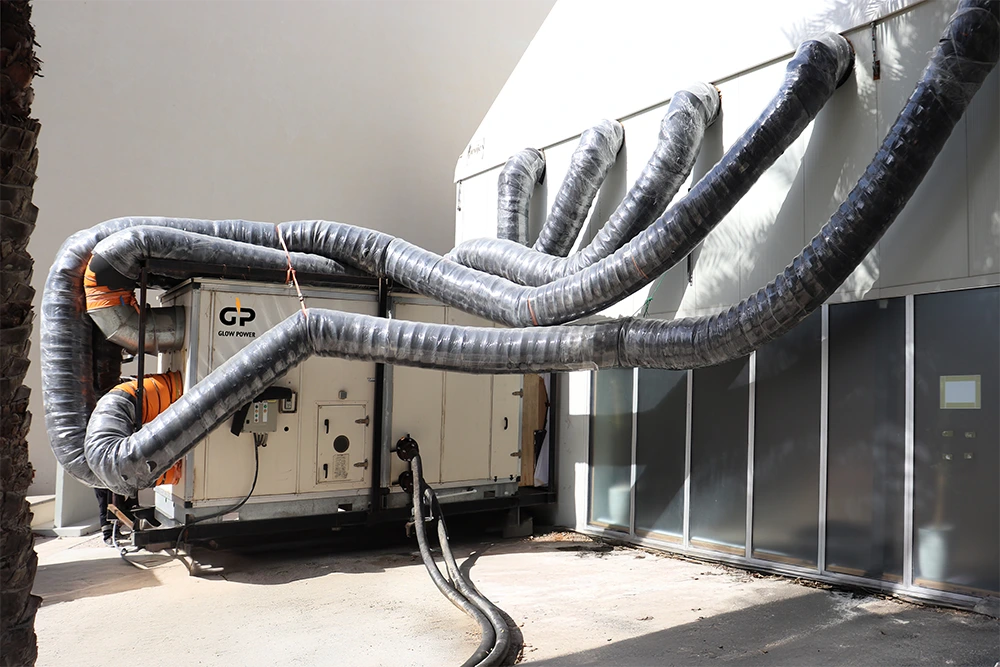
Portable air conditioning units are the most common cooling solution for temporary Ramadan tents. These standalone units connect to the tent via flexible ducting and can be positioned outside the tent structure to reduce noise.
| Cooling Unit | Cooling Capacity | Best For | Coverage Area |
|---|---|---|---|
| 5-Ton Portable AC | 60,000 BTU | Small majlis, prayer rooms, VIP areas | 40-60 sqm |
| 10-Ton Portable AC | 120,000 BTU | Medium Ramadan tents, dining areas | 80-120 sqm |
| 25-Ton Portable AC | 300,000 BTU | Large event tents, multi-zone setups | 200-300 sqm |
Sizing Your Cooling for Ramadan Events
When calculating cooling requirements for temporary Ramadan tents, several factors increase the load beyond standard calculations:
- Occupancy: A Ramadan iftar tent may host 100-500 guests. Each person generates approximately 400 BTU/hr of body heat.
- Cooking equipment: If food preparation happens inside or adjacent to the tent, heat output from kitchen equipment adds significantly to the cooling load.
- Lighting and AV: Stage lighting, decorative lighting, and display screens all generate heat.
- Tent insulation: Standard event tents provide minimal insulation. White or light-colored tent fabric reduces solar heat gain compared to darker colors.
For a more precise estimate, consult with your cooling equipment provider, who can assess your specific tent layout, occupancy, and heat sources.
UAE REQUIREMENT
Civil defense authorities in Dubai, Abu Dhabi, and Sharjah require that temporary Ramadan tents maintain adequate ventilation and cooling. Tents hosting public gatherings must have emergency exits that are not obstructed by cooling ducting or electrical equipment.
Power Distribution: Getting Electricity Safely Inside Your Tent
Having a generator is only the first step. You also need a safe, organized way to distribute power from the generator to every piece of equipment inside your Ramadan tent. This is where power distribution boards and power cables come in.
The Distribution Chain
A typical temporary power distribution setup for a Ramadan event follows this path:
- Generator produces power (typically 400V three-phase)
- Primary distribution board receives power from the generator and splits it into multiple protected circuits
- Power cables carry electricity from the distribution board to different zones within the tent
- Secondary distribution units such as splitters and socket outlets provide final connection points for equipment
Choosing the Right Distribution Equipment
For most Ramadan tent setups, the following distribution equipment is recommended:
- Small to medium setups: A GPDB-63A distribution board or GPDB-160A handles lighting, AV, and a few AC units
- Medium to large setups: A GPDB-250A or GPDB-400A supports multiple cooling units, kitchen circuits, and full lighting rigs
- Final connections: Twin socket outlets and gangways provide safe plug-in points for individual appliances
SAFETY WARNING
Never run temporary power cables under carpets or rugs inside Ramadan tents. This is a fire hazard and violates UAE electrical safety codes. Use cable ramps or overhead cable routing to keep cables protected and accessible for inspection.
For safe cable routing across pedestrian areas, cable ramps prevent trip hazards and protect cables from damage.
Safety and Regulatory Requirements for Ramadan Events
Temporary electrical installations for Ramadan events in the UAE must comply with several regulatory requirements. Failing to meet these standards can result in event shutdowns, fines, or serious safety incidents.
Key Safety Considerations
- Fire prevention: All electrical connections must use properly rated connectors and circuit breakers. Overloaded circuits are a primary cause of electrical fires in temporary structures.
- Earthing and grounding: Every piece of temporary electrical equipment must be properly earthed. This includes generators, distribution boards, and metal tent frames.
- RCD protection: Residual Current Devices (RCDs) are mandatory on all circuits supplying socket outlets in temporary installations. RCDs detect electrical faults and disconnect power within milliseconds, preventing electric shock.
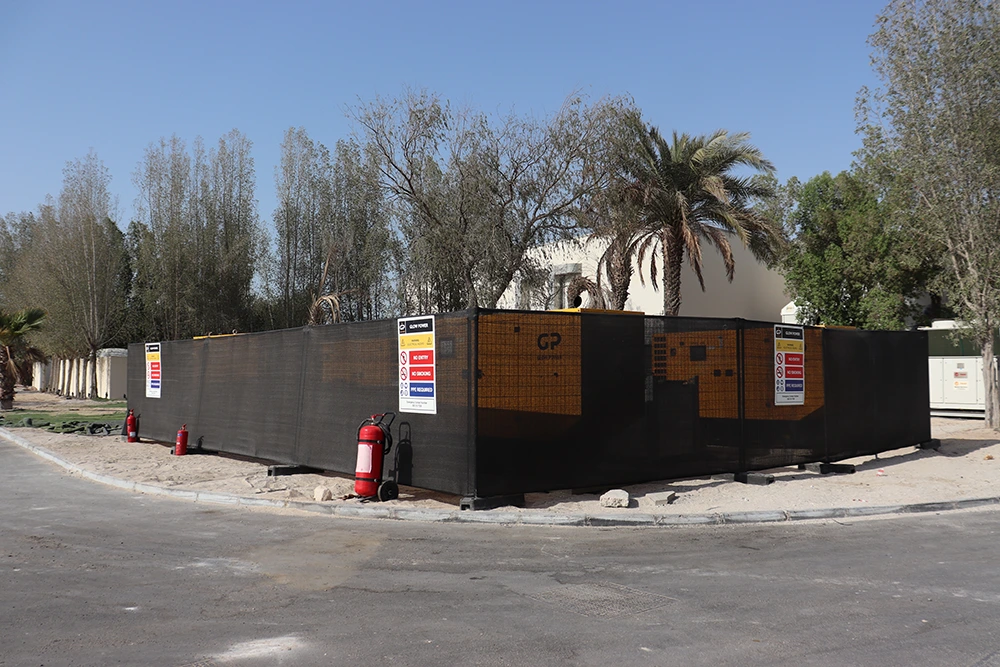
- Generator placement: Generators must be positioned outside and away from tent structures, with exhaust directed away from guest areas. Maintain a minimum clearance as specified by civil defense regulations.
- Fuel storage: If your generator runs for the full Ramadan period, you will need a reliable fuel supply. Fuel storage tanks should be bunded and positioned on level ground, away from ignition sources.
Regulatory Checklist
- Obtain necessary permits from the local municipality for your temporary Ramadan tent
- Ensure all electrical work is carried out or inspected by a licensed electrical contractor
- Submit electrical layout drawings to civil defense if required for your emirate
- Arrange civil defense inspection and approval before opening to the public
- Maintain fire extinguishers and emergency exits as per civil defense requirements
IMPORTANT
In Dubai, temporary structures for public Ramadan events require approval from Dubai Civil Defense (DCD). Applications should be submitted well in advance, as processing can take 2-4 weeks during the pre-Ramadan period.
Frequently Asked Questions
What size generator do I need for a Ramadan tent?
The generator size depends on your tent’s total electrical load, which includes cooling, lighting, catering equipment, and AV systems. A small majlis of 50-100 sqm typically needs a 60-100 kVA generator, while a large Ramadan tent of 500+ sqm may require 300-500 kVA. Always add a 25% safety margin to your calculated load. Use the equipment load table in this guide as a starting point, then consult with your power rental provider for a detailed assessment.
How many AC units do I need to cool a Ramadan tent?
This depends on the tent size, number of guests, and whether cooking equipment is present. As a general guideline, plan for one 10-ton portable AC unit per 80-120 sqm of tent space. For tents with heavy kitchen activity or high occupancy (200+ guests), increase cooling capacity by 20-30%. Contact your cooling equipment provider for a detailed assessment based on your specific tent layout and conditions.
Do I need permits for a temporary Ramadan tent with electrical equipment?
Yes. In all UAE emirates, temporary structures hosting public gatherings require municipal permits and civil defense approval. The electrical installation must be carried out or verified by a licensed contractor, and fire safety measures (extinguishers, emergency exits, smoke detection) must be in place. Requirements vary by emirate, so check with your local municipality early in the planning process.
Can I connect a Ramadan tent to the main electricity grid instead of using a generator?
In some cases, a temporary grid connection from DEWA or the local utility provider is possible, but this requires an application process, a licensed electrical contractor, and approved connection equipment. For most seasonal Ramadan setups, renting a generator is faster and more practical, especially when the venue is in a park, open lot, or exhibition ground without existing electrical infrastructure.
How do I keep power cables safe inside a Ramadan tent?
Use properly rated power cables with industrial connectors, never domestic extension leads. Route cables along walls or overhead where possible, and use cable ramps at all pedestrian crossing points. All cable connections should be weatherproof if exposed to the outdoors, and circuits must be protected by RCDs. Avoid running cables under carpets or through doorways where they can be pinched or damaged.
Conclusion
Setting up temporary power and cooling for Ramadan tents, majlis gatherings, and seasonal events in the UAE requires careful planning across three key areas: power generation, cooling, and electrical distribution. Starting with an accurate load assessment ensures you select the right generator size. Matching your cooling capacity to your tent dimensions and occupancy keeps guests comfortable throughout the evening. And using proper distribution equipment with safety protections keeps your installation compliant and safe for the entire Ramadan period.
Plan early, engage licensed contractors for your electrical installation, and secure civil defense approvals well before the first night of Ramadan. With the right preparation, your temporary Ramadan setup will run reliably from the first iftar to the last.