When setting up temporary power for an event, construction site, or any project requiring off-grid electricity, understanding how power flows from the generator to your equipment is essential. The terms “primary distribution” and “secondary distribution” describe two distinct stages of this power flow, each with specific equipment, voltage levels, and safety considerations.
Getting this distinction wrong can lead to undersized cables, overloaded circuits, or safety hazards. Conversely, understanding how primary and secondary distribution work together helps you plan efficient, safe, and cost-effective temporary power systems.
This guide explains both distribution stages, compares their characteristics, and provides practical guidance for events, exhibitions, and other temporary power applications in the UAE.
What Is Power Distribution in Temporary Installations?
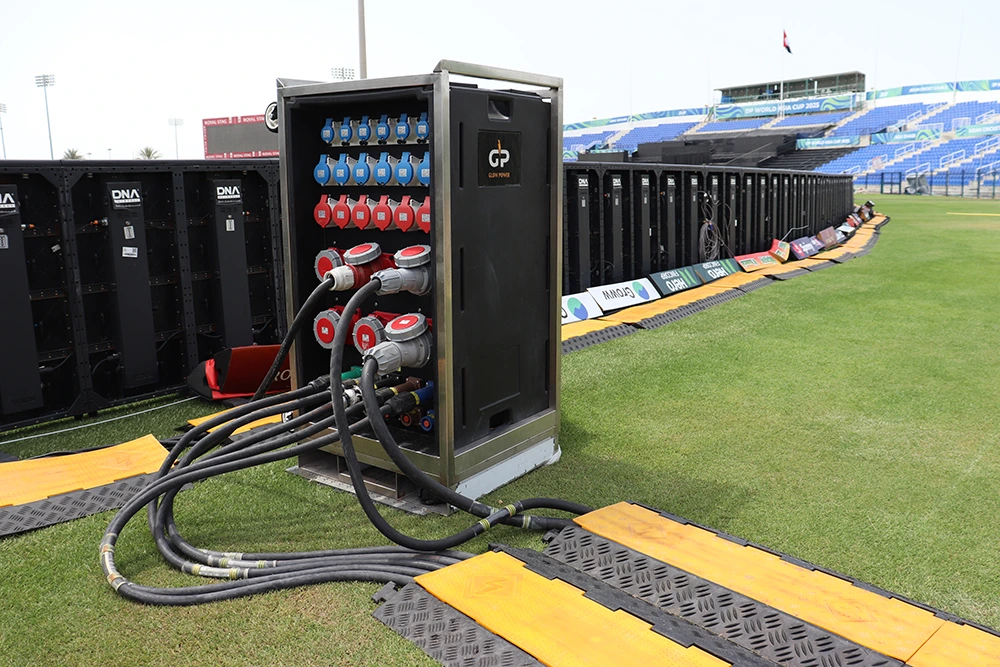
Power distribution refers to the system of equipment and cables that carries electrical power from a generation source (such as a diesel generator) to the devices and equipment that need it. In permanent installations, utility companies handle this through substations and transformers. In temporary setups, rental equipment performs the same function.
Temporary power distribution typically involves two main stages:
- Primary Distribution: High-current power transfer from the generator to main distribution points
- Secondary Distribution: Lower-current power delivery from distribution points to individual loads
Think of it like a tree: the generator is the trunk, primary distribution forms the main branches, and secondary distribution creates the smaller branches that reach individual leaves (your equipment).
Primary Distribution: The High-Power Stage
Primary distribution handles the initial transfer of power from your generator to one or more main distribution boards. This stage operates at higher currents and requires heavy-duty equipment designed for substantial electrical loads.
Characteristics of Primary Distribution
| Characteristic | Primary Distribution |
|---|---|
| Typical Current Rating | 125A to 800A (or higher) |
| Voltage Level | 400V three-phase (in UAE) |
| Cable Type | Single-core heavy-duty cables (70mm² to 240mm²) |
| Connection Type | Powerlock connectors or lug terminations |
| Equipment | Main distribution boards, totalizing panels |
Primary Distribution Equipment
The main components in primary distribution include:
Totalizing Panels: When multiple generators supply power to a single event or site, totalizing panels combine their outputs into a unified supply. These panels synchronize generator outputs and provide centralized monitoring and protection.
Main Distribution Boards: These boards receive power from the generator (or totalizing panel) and split it into multiple protected circuits. Large distribution boards rated at 400A or higher serve as the heart of primary distribution.
Heavy-Duty Cables: Primary distribution uses thick, single-core power cables capable of handling high currents. These are typically terminated with Powerlock connectors for quick, secure connections.
TECHNICAL NOTE
In three-phase systems common to the UAE, primary distribution typically uses four or five single-core cables: three phase conductors (L1, L2, L3), a neutral (N), and sometimes a separate earth (PE). Each conductor may be 120mm² to 240mm² depending on the total load.
When Primary Distribution Is Essential
Primary distribution becomes necessary when:
- Total power demand exceeds 100 kVA
- Multiple distribution points are needed across a large site
- Several generators must be synchronized
- The distance from generator to main load center exceeds 50 meters
Secondary Distribution: Delivering Power to End Users
Secondary distribution takes power from main distribution boards and delivers it to individual pieces of equipment. This stage operates at lower currents and uses smaller, more flexible equipment that can be positioned close to where power is needed.
Characteristics of Secondary Distribution
| Characteristic | Secondary Distribution |
|---|---|
| Typical Current Rating | 16A to 125A |
| Voltage Level | 400V three-phase or 230V single-phase |
| Cable Type | Multi-core cables (2.5mm² to 35mm²) |
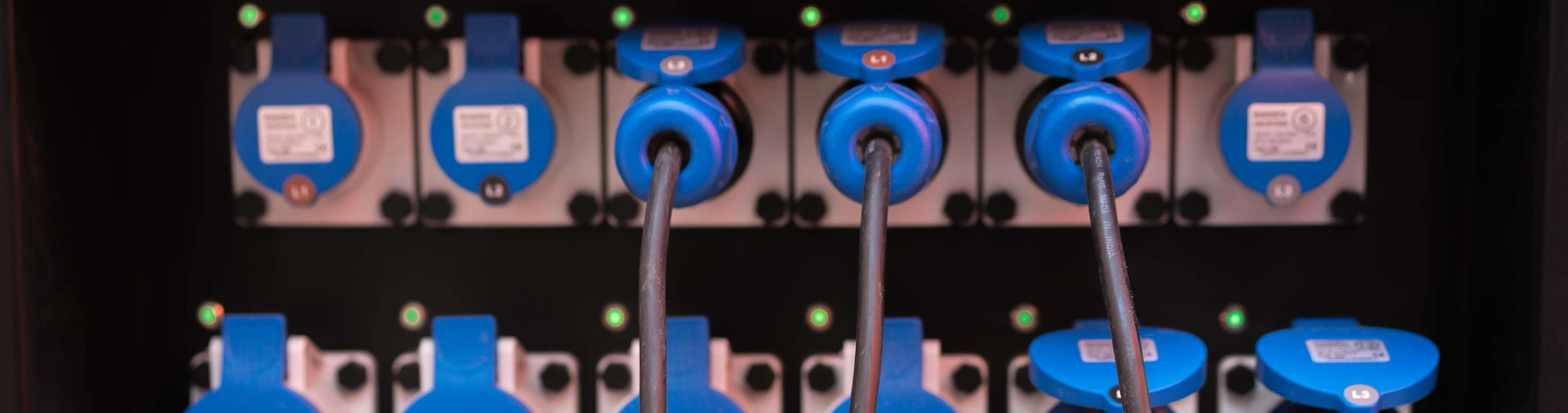
| Connection Type | CEE industrial connectors (16A, 32A, 63A, 125A) |
| Equipment | Sub-distribution boards, splitters, extension leads |
Secondary Distribution Equipment
Secondary distribution relies on a variety of smaller, versatile components:
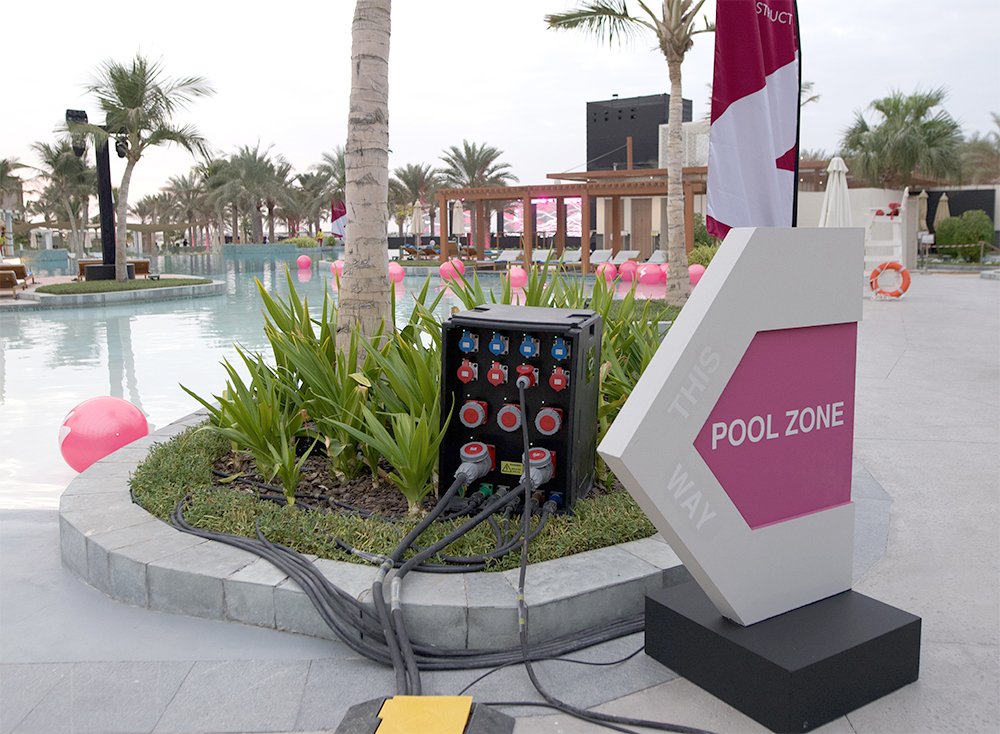
Sub-Distribution Boards: Smaller boards rated from 63A to 160A that receive power from primary distribution and provide multiple outlet circuits. These are positioned throughout a venue to minimize cable runs to individual equipment.
CEE Splitters: Devices like 3-phase and 5-pole CEE splitters divide a single circuit into multiple outlets, enabling several devices to share one distribution board output.
Extension Cables: CEE extension cables in various ratings (32A, 63A, 125A) bridge the gap between distribution points and equipment locations.
Socket Outlets: Twin sockets and gang boxes provide final connection points for standard 13A or 16A equipment.
PRO TIP
Position secondary distribution boards within 25 meters of the equipment they serve. This reduces voltage drop, minimizes cable costs, and makes troubleshooting easier during the event.
Primary vs. Secondary Distribution: Side-by-Side Comparison
The following table summarizes the key differences between primary and secondary distribution:
| Factor | Primary Distribution | Secondary Distribution |
|---|---|---|
| Purpose | Transfer bulk power from generator to main distribution points | Deliver power from distribution points to individual equipment |
| Current Ratings | 125A to 800A+ | 16A to 125A |
| Cable Size | 70mm² to 240mm² single-core | 2.5mm² to 35mm² multi-core |
| Connectors | Powerlock, lugs, cam-lock | CEE plugs and sockets |
| Flexibility | Fixed during setup, rarely reconfigured | Easily adjusted during the event |
| Safety Focus | High-current protection, short-circuit coordination | RCD protection, user accessibility |
| Typical Distance | Generator to venue (50m to 200m+) | Distribution board to equipment (5m to 30m) |
| Installation | Requires qualified electricians | Can be handled by trained crew (under supervision) |
Real-World Scenarios: When to Use Each Type
Understanding when each distribution type applies helps you plan more effectively.
Scenario 1: Small Corporate Event (Under 50 kVA)
For a corporate gathering with lighting, sound, and catering equipment totaling 40 kVA, you might use a single 60 kVA generator connected directly to a 63A distribution board. From there, secondary distribution handles all equipment connections.
Primary distribution: Minimal (short cable run from generator to single board)
Secondary distribution: 3-4 sub-boards positioned around the venue with CEE extensions to equipment
Scenario 2: Large Outdoor Concert (200+ kVA)
A major concert with main stage, VIP areas, food vendors, and production facilities might require 300 kVA from two synchronized generators.
Primary distribution: Two generators feed a totalizing panel, which supplies a main 400A distribution board. Heavy Powerlock cables (150mm²) run to three zone distribution boards across the site.
Secondary distribution: Each zone board feeds multiple 63A and 32A sub-boards. CEE splitters and extensions deliver power to individual equipment.
Scenario 3: Construction Site Power
A construction site requiring power for tower cranes, welding equipment, site offices, and lighting needs robust primary distribution to handle high starting currents and continuous heavy loads.
Primary distribution: 250A main board near the generator, with 125A feeds to different work zones
Secondary distribution: Rugged IP65-rated boards and weatherproof sockets for outdoor use
UAE REQUIREMENT
All temporary electrical installations in the UAE must comply with local regulations and may require inspection by approved authorities. Ensure your distribution system includes appropriate protection devices and earthing arrangements as specified by Dubai Municipality or relevant emirate authorities.
Safety Considerations for Power Distribution
Both distribution stages require careful attention to safety, but the risks and protection methods differ.
Primary Distribution Safety
- High fault currents: Short circuits at primary level can generate extremely high currents. Main circuit breakers must have adequate breaking capacity (typically 25kA or higher).
- Cable protection: Heavy cables must be protected from mechanical damage using cable ramps or buried conduits.
- Qualified personnel only: Connections at primary level should be made by qualified electricians with appropriate PPE.
- Coordination: Protection devices must be coordinated so that faults are isolated at the lowest possible level.
Secondary Distribution Safety
- RCD protection: All final circuits should include 30mA residual current devices (RCDs) to protect against electric shock.
- IP ratings: Equipment used outdoors must have appropriate ingress protection (minimum IP44 for sheltered outdoor use, IP65 for exposed locations).
- Cable management: Even smaller cables create trip hazards. Use cable covers in pedestrian areas.
- Load balancing: Distribute single-phase loads evenly across the three phases to prevent imbalance.
SAFETY FIRST
Never exceed the rated capacity of cables or equipment. Overloading causes heat buildup, which can damage insulation and create fire hazards. Always include a 20-25% safety margin when calculating loads.
Planning Your Distribution System
Determine appropriate cable sizes for your installation. When planning, consider these factors:
- Calculate total load: List all equipment and their power requirements. Add a 25% safety margin.
- Map the site: Identify where power is needed and the distances from the generator location.
- Determine distribution levels: Decide where primary distribution ends and secondary begins based on load centers.
- Select appropriate equipment: Choose distribution boards, cables, and accessories rated for your calculated loads.
- Plan cable routes: Identify paths that minimize length while avoiding hazards and high-traffic areas.
Frequently Asked Questions
What voltage is used in temporary power distribution in the UAE?
Temporary power systems in the UAE typically operate at 400V three-phase (line-to-line) and 230V single-phase (line-to-neutral). This matches the standard supply voltage used throughout the country. Primary distribution operates at 400V three-phase, while secondary distribution may provide both 400V three-phase and 230V single-phase depending on equipment requirements.
Can I connect equipment directly to a generator without distribution boards?
For very small setups with one or two pieces of equipment, direct connection may be possible if the generator has appropriate outlet sockets. However, this approach lacks circuit protection, makes load management difficult, and limits flexibility. Even for small events, using at least one distribution board with circuit breakers and RCD protection is recommended for safety and convenience.
How do I know if I need primary distribution?
You likely need dedicated primary distribution if your total power requirement exceeds 100 kVA, if power must reach multiple locations more than 50 meters apart, if you’re using multiple generators, or if your main load center is far from where the generator must be positioned (due to noise or access constraints). Smaller setups may function with the generator’s built-in outlets feeding directly into secondary distribution.
What is the difference between CEE and Powerlock connectors?
CEE connectors (also called industrial plugs or IEC 60309) are standard throughout Europe and the UAE for currents up to 125A. They feature color-coded pins for different voltages and include mechanical interlocks for safety. Powerlock connectors handle higher currents (typically 400A to 800A) used in primary distribution. They consist of separate single-pole connectors for each conductor, allowing heavy cables to be connected individually.
How far can I run cables from the distribution board?
Maximum cable length depends on cable size, load current, and acceptable voltage drop (typically 3-5%). As a general guideline, keep secondary distribution runs under 50 meters for 32A circuits using standard cable sizes. For longer distances or higher currents, use larger cable cross-sections or position additional sub-distribution boards closer to the loads.
Conclusion
Primary and secondary distribution serve distinct but complementary roles in temporary power installations. Primary distribution handles the heavy lifting of moving large amounts of power from generators to main distribution points, while secondary distribution provides the flexibility and accessibility needed to connect individual equipment throughout a venue or site.
Understanding these differences helps you plan safer, more efficient temporary power systems. Whether you’re setting up for a small corporate event or a large-scale outdoor festival, matching the right distribution equipment to each stage of power delivery ensures reliable operation and protects both equipment and personnel.